
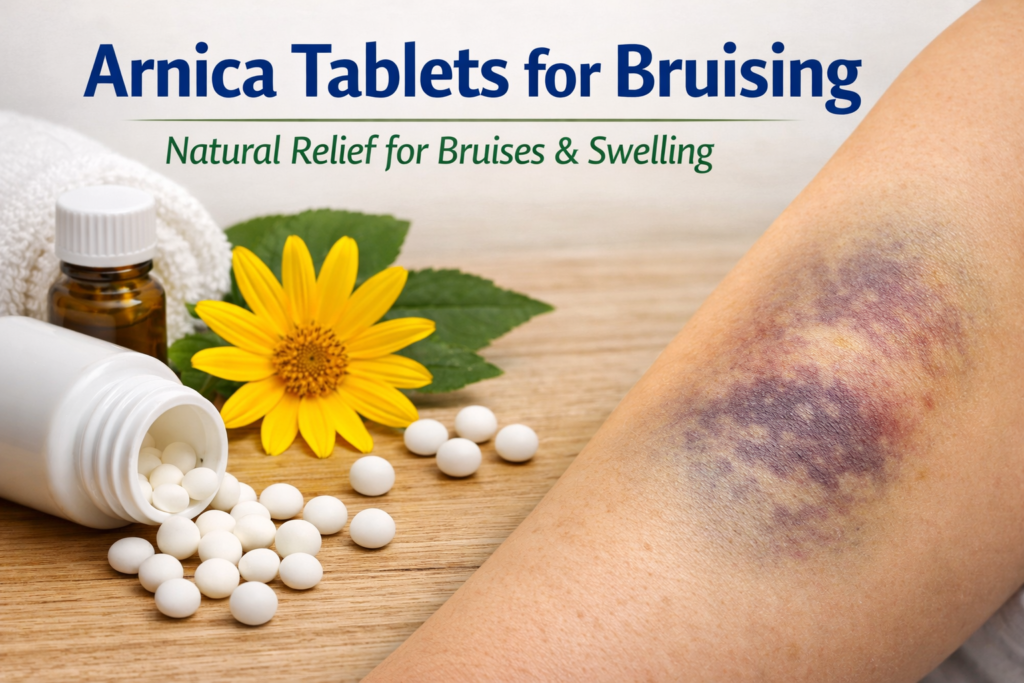


Bruises are common after minor bumps, sports injuries, cosmetic procedures, falls, or everyday accidents. They happen when small blood vessels under the skin break and leak blood into nearby tissue, causing tenderness, swelling, and the familiar red, purple, blue, green, and yellow color changes as the bruise heals. Most bruises improve gradually and often fade within about two weeks, though some can last longer.
Among the most searched natural options for bruise care are arnica tablets for bruising. Many people use them to support recovery after minor injury or to reduce discomfort, swelling, and discoloration. Homeopathic arnica tablets are commonly marketed for temporary relief of bruise-related pain, swelling, and skin discoloration after minor injuries and falls.
But do arnica tablets really help bruises, and how should you use them safely? Here is what to know.
What Are Arnica Tablets for Bruising?
Arnica comes from Arnica montana, a plant traditionally used in wellness products for pain, swelling, and bruising. The raw herb itself is considered toxic if used improperly, but homeopathic arnica tablets contain highly diluted preparations and are sold over the counter for short-term symptom relief.
When people talk about arnica tablets for bruises, they are usually referring to homeopathic tablets or pellets designed to dissolve in the mouth. These products are commonly promoted for:
- minor bruising
- tenderness after a bump or fall
- swelling around a bruise
- discoloration associated with bruises
- soreness after overexertion or minor trauma
How Bruises Form
A bruise, also called a contusion, forms when tiny blood vessels break under the skin after an injury. Blood collects in the surrounding tissue, leading to pain, swelling, and color changes. Early on, a bruise may look red or pink. Then it often becomes blue or purple, later fading into green, yellow, or brown before clearing.
This is why effective bruise care usually focuses on three things:
- reducing swelling
- easing pain
- supporting normal healing over time
How Arnica Tablets May Help with Bruising
Homeopathic arnica tablets are used with the goal of easing the main symptoms people notice with a bruise: pain, swelling, and discoloration. Product labeling for oral arnica bruise tablets describes temporary relief of these symptoms after minor injuries and falls.
People often choose arnica tablets for bruising because they are:
- easy to take soon after a minor injury
- commonly used alongside icing and elevation
- widely available without a prescription
- often preferred by people looking for a nonprescription bruise-support option
That said, it is important to keep expectations realistic. Arnica is commonly used for bruise care, but evidence is mixed across different products and different clinical situations. Some reviews suggest potential benefits in pain and inflammation settings, while medical references also note that effectiveness is not firmly established for every use.
Arnica Tablets vs Arnica Gel for Bruises
Many people are unsure whether to choose arnica tablets for bruises or a topical arnica gel/cream.
Arnica Tablets
Oral homeopathic tablets are generally chosen when:
- the bruise is tender and sore
- there are multiple bruised areas
- the person prefers an oral option
- they want to start use soon after a minor bump or fall
Arnica Gel or Cream
Topical arnica products are often chosen when:
- the bruise is in one specific area
- the person wants direct application on the skin
- they are focusing on visible discoloration in one spot
Topical arnica bruise products are commonly directed to be applied as soon as possible after a minor bruise and repeated during the day as needed.
Can You Use Both?
Some oral arnica product pages state that oral pellets can be used together with a topical arnica product. Whether that is appropriate depends on the specific product label and the person’s situation.
How to Use Arnica Tablets for Bruising
The safest approach is to follow the directions on the exact product label you buy. Different arnica tablets and pellets can have different instructions, age cutoffs, and warning sections.
In general, bruise-focused oral arnica products are often used:
- as soon as possible after bruising starts
- more frequently at the beginning
- then less often as symptoms improve
For best results, many people also combine basic bruise care:
- apply a cold pack early after injury
- elevate the area when possible
- rest the injured area
- avoid repeated impact to the same spot
Best Time to Take Arnica Tablets for Bruises
If you decide to use arnica tablets for bruising, people usually start them as early as possible after the bruise appears. This timing fits common product directions and the general principle of early bruise care, especially while swelling and tenderness are most noticeable.
Benefits People Look For in Arnica Tablets for Bruising
People searching for best arnica tablets for bruising are usually hoping for support in these areas:
1. Less Pain
Bruises can be sore to touch, especially in the first day or two. Oral arnica products are commonly labeled for temporary relief of pain from minor injuries and bruising.
2. Less Swelling
Mild swelling often accompanies bruising. Arnica bruise tablets are commonly promoted for swelling linked with minor injury.
3. Reduced Discoloration
One of the biggest reasons people try arnica for bruising is the hope that the bruise will look better sooner. Product labeling specifically mentions bruise discoloration among the symptoms addressed.
4. Convenience
Tablets are portable and easy to keep at home, in a sports bag, or in a travel kit.
Are Arnica Tablets Safe?
Homeopathic arnica tablets are generally sold for short-term use, but “natural” does not always mean risk-free. Safety depends on using the product exactly as directed and paying attention to warnings. Official label information advises extra caution in pregnancy or breastfeeding and says to stop use and ask a doctor if symptoms worsen, new symptoms appear, or redness/swelling suggest a more serious problem.
You should also know:
- the raw arnica herb is not the same as highly diluted homeopathic arnica and is considered toxic if misused
- arnica may interact with medicines that slow blood clotting, which can increase the risk of bruising or bleeding according to medical references
- frequent unexplained bruising should not be self-treated without medical advice because it can sometimes point to a bleeding or blood disorder
Who Should Avoid Self-Treating a Bruise with Arnica Alone?
Use extra caution and seek professional advice first if:
- you bruise easily without clear injury
- the bruise is very large, extremely painful, or getting worse
- there is severe swelling
- the bruise affects eye movement or limb movement
- you have repeated bruising
- you take blood thinners or other medicines that affect clotting
- you are pregnant or breastfeeding
- the bruised area becomes red, hot, or infected-looking
When to See a Doctor for a Bruise
Most bruises heal on their own, but medical evaluation is important if:
- bruises appear for no reason
- bruising is frequent or unusually large
- there is severe pain or a growing lump
- pain lasts beyond a few days after a minor injury
- you suspect a fracture or serious trauma
- the bruise shows signs of infection
- you have a personal or family history of bleeding problems
How Long Do Bruises Last?
A typical bruise often improves over around two weeks, though deeper or larger bruises may take longer. During healing, the color changes are normal and reflect breakdown of trapped blood under the skin.
Do Arnica Tablets Work for Bruising?
This is the question most people really want answered.
The honest answer is: some people use arnica tablets for bruising and feel they help, but the overall evidence is mixed. Product labeling supports use for temporary relief of bruise symptoms, and some reviews note encouraging findings for pain and inflammation in certain contexts. At the same time, major medical references remain cautious and do not present arnica as a guaranteed or universally proven bruise treatment.
So the best way to think about arnica tablets is as a supportive option for minor bruises, not a substitute for medical care when bruising is severe, unexplained, or persistent.
Practical Tips for Faster Bruise Recovery
Whether or not you use arnica tablets for bruises, these steps are sensible:
- ice the area early
- elevate the area above heart level when practical
- protect it from repeat injury
- watch for increasing pain, swelling, or unusual symptoms
Final Thoughts
Arnica tablets for bruising are a popular over-the-counter option for people dealing with minor bruise-related pain, swelling, and discoloration. They are easy to use, widely recognized in homeopathic bruise care, and often started soon after a minor injury. But they should be used thoughtfully, according to the label, and with proper attention to safety warnings.
If your bruise is small and clearly linked to a minor bump, arnica tablets may be one option to consider alongside rest, ice, and elevation. If the bruise is severe, unexplained, frequent, or slow to improve, a medical evaluation is the better next step.
FAQ Section
1. What are arnica tablets used for in bruising?
Arnica tablets are commonly used for temporary relief of bruise-related pain, swelling, and discoloration after minor injuries and falls.
2. How soon should I take arnica tablets for bruises?
Many bruise-focused oral arnica products are intended to be started as soon as bruising occurs. Follow the exact directions on your product label.
3. Can I use arnica tablets and arnica gel together?
Some product information indicates oral arnica can be used with topical arnica, but you should follow the label directions for both products.
4. Are arnica tablets safe for everyone?
No. People who are pregnant, breastfeeding, taking blood thinners, or dealing with unexplained or severe bruising should get medical advice first.
5. How long does a bruise usually last?
Most bruises improve in about two weeks, though some can take longer depending on size and depth.
6. When should I worry about a bruise?
Seek medical care if bruising is frequent, severe, unexplained, very painful, associated with a lump, or shows signs of infection.