
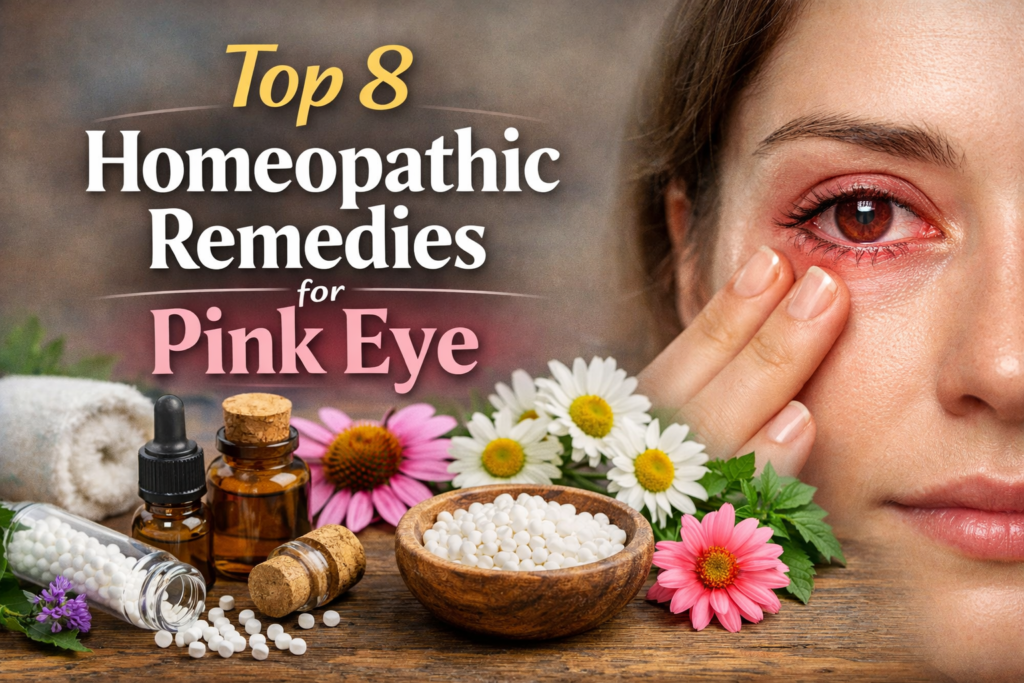
Top 8 Homeopathic Remedies for Pink Eye


Pink eye, also called conjunctivitis, is one of the most common eye problems in both children and adults. It can cause redness, watering, itching, burning, irritation, sticky discharge, swollen eyelids, and a gritty feeling in the eyes. Some cases are mild and clear up with simple care. Other cases spread easily from person to person or need medical attention, especially if there is eye pain, light sensitivity, blurred vision, or worsening swelling. Viral and bacterial conjunctivitis can spread through hands, towels, pillowcases, and contaminated surfaces, while allergic conjunctivitis is not contagious.
Many people search for homeopathic remedies for pink eye because they want symptom-based support for red, watery, irritated, sticky, or itchy eyes. In homeopathy, the medicine is selected according to the exact symptom pattern. The right remedy may depend on whether the eye is mainly watery, burning, swollen, sticky, itchy, worse in sunlight, or linked with cold symptoms or allergies.
This guide explains the best homeopathic remedies for pink eye, the different types of pink eye, whether pink eye is contagious, how symptoms differ from one type to another, what hygiene steps matter most, how to prevent spread at home, and which red-flag symptoms need urgent care.
What Is Pink Eye?
Pink eye is inflammation of the clear membrane that covers the white part of the eye and the inside of the eyelid. When this lining becomes irritated or inflamed, the eye may look pink, red, swollen, watery, or sticky. Pink eye can affect one eye or both eyes and may be caused by:
- viruses
- bacteria
- allergies
- irritants such as smoke, dust, chlorine, or chemicals
The exact cause matters because viral and bacterial pink eye can spread, while allergic pink eye does not spread from person to person.
Is Pink Eye Contagious?
This is one of the most important questions for families, schools, and workplaces.
Viral Pink Eye
Viral pink eye is contagious. It often spreads through:
- touching the eyes and then touching surfaces
- contaminated towels or pillowcases
- hand-to-eye contact
- close contact with someone who has viral eye symptoms
Bacterial Pink Eye
Bacterial pink eye is also contagious and can spread in a similar way.
Allergic Pink Eye
Allergic pink eye is not contagious. It happens when the eyes react to allergens such as pollen, dust, pet dander, or seasonal triggers.
Because viral and bacterial forms can spread easily, hand hygiene and not sharing personal items are very important.
Types of Pink Eye
A strong blog for U.S. readers should clearly explain the major types of pink eye.
1. Viral Pink Eye
Viral conjunctivitis is one of the most common forms of pink eye. It often occurs along with a cold, sore throat, or other upper respiratory symptoms.
Common signs of viral pink eye
- watery discharge
- red eye
- irritation or burning
- gritty feeling
- often starts in one eye and may spread to the other
- may occur with cold symptoms
Viral pink eye often improves gradually on its own. Antibiotics do not treat viral conjunctivitis.
2. Bacterial Pink Eye
Bacterial conjunctivitis may cause more sticky or thick discharge than viral pink eye.
Common signs of bacterial pink eye
- yellow or green discharge
- eyelids stuck together, especially after sleep
- red eye
- irritated eye
- crusting on eyelashes
Some mild bacterial cases improve on their own, but others may need medical treatment depending on severity, contact lens use, or persistence.
3. Allergic Pink Eye
Allergic conjunctivitis is caused by allergy triggers and often affects both eyes together.
Common signs of allergic pink eye
- intense itching
- watery eyes
- puffiness
- redness
- symptoms in both eyes
- often linked with sneezing or nasal allergy symptoms
This form is not contagious and often flares seasonally or around allergens.
4. Irritant Pink Eye
This can happen when the eye reacts to smoke, dust, chemical exposure, chlorine, or a foreign substance.
Common signs of irritant pink eye
- burning
- redness
- watering
- discomfort after exposure
- symptoms linked to a clear trigger
If chemical exposure occurs, urgent rinsing and medical evaluation may be needed depending on the substance.
Common Symptom Patterns in Pink Eye
Understanding symptom patterns helps readers identify which type may be more likely.
🌿 Get Expert Homeopathic Care
Consult our experienced homeopathic doctors for personalised treatment
Watery red eye
This is more often seen with viral pink eye or allergic pink eye.
Sticky eyelids in the morning
This is more often associated with bacterial pink eye.
Intense itching
This strongly suggests allergic pink eye.
Puffy swollen eyelids
This can happen with allergies, irritation, or active inflammation.
Burning and gritty feeling
This can occur in viral, irritant, or mixed inflammation patterns.
Light sensitivity or blurred vision
This is not something to casually ignore, especially if it is significant.
Best Homeopathic Remedies for Pink Eye
1. Euphrasia for Watery, Burning, Irritated Eyes
Euphrasia is one of the most commonly considered homeopathic remedies for pink eye when the eyes are:
- watery
- irritated
- burning
- gritty
- sensitive to light
This remedy is often thought of when the eyes water a lot and irritation is the main complaint.
2. Belladonna for Sudden Red, Hot, Congested Eyes
Belladonna may be considered when pink eye begins suddenly and the eyes appear:
- bright red
- hot
- congested
- sensitive to light
- inflamed with a sudden onset
This remedy is often considered in a strong red, acute inflammatory picture.
3. Pulsatilla for Thick Yellow Discharge and Sticky Lids
Pulsatilla is often considered when symptoms include:
- thicker yellow discharge
- sticky eyelashes
- eyelids stuck together in the morning
- mild eye irritation
- pink eye after a cold
This remedy may fit sticky, mucus-type eye discharge patterns.
4. Argentum Nitricum for Red Inflamed Eyes with Mucus
Argentum nitricum may be considered when there is:
- red irritated eye
- mucous discharge
- swollen lids
- strain-related irritation
- inflamed conjunctiva
5. Apis Mellifica for Puffy Swollen Eyelids
Apis mellifica may be considered when the eyelids are:
- puffy
- swollen
- pink
- burning or stinging
- better from cool applications
This remedy is often thought of when swelling is very noticeable.
6. Aconite for Sudden Early Inflammation
Aconite may be considered in the early stage if symptoms start suddenly.
Key indications
- sudden redness
- early watering
- acute irritation
- onset after cold exposure in some cases
7. Hepar Sulph for Sensitive Eyes with Sticky Discharge
Hepar sulph may be considered when:
- eyes feel very sensitive
- discharge is sticky
- cold air worsens the irritation
- there is marked inflammatory sensitivity
8. Mercurius Solubilis for Active Inflammation with Discharge
Mercurius solubilis may be considered when:
- discharge is sticky
- lids are swollen
- redness is marked
- irritation is stronger at night
- the eye looks actively inflamed
How to Choose the Right Homeopathic Remedies for Pink Eye
The best homeopathic remedies for pink eye depend on the symptom pattern.
Choose Euphrasia when:
- watering is the main complaint
- the eyes burn and feel gritty
- light sensitivity is present
Choose Belladonna when:
- redness is sudden and strong
- the eyes look hot and congested
Choose Pulsatilla when:
- discharge is yellowish and sticky
- eyelids stick together after sleep
Choose Apis Mellifica when:
- eyelids are puffy and swollen
- cool compresses feel soothing
Choose Aconite when:
- symptoms are in the very early stage
- the redness started suddenly
Choose Hepar Sulph when:
- sensitivity is strong
- the eye reacts badly to cold air
- discharge is sticky
Hygiene Tips for Pink Eye
This section is critical if you want the article to rank well in the U.S., because hygiene advice is one of the first things readers want.
What to do
- wash hands frequently
- clean discharge gently with a clean cotton pad or gauze
- use a fresh cloth each time
- wash pillowcases, towels, and washcloths
- avoid touching or rubbing the eyes
- discard old eye makeup
- stop using contact lenses until fully recovered
What not to do
- do not share towels
- do not share pillowcases
- do not share eye drops
- do not use old contact lenses
- do not use old makeup around the eyes
- do not put unclean hands near the eyes
Viral and bacterial conjunctivitis spread easily through hands and contaminated personal items, so hygiene is one of the most important parts of care and prevention.
Home Care Tips for Pink Eye
For mild pink eye, supportive care may help with comfort.
- use a clean cool compress
- rest the eyes
- reduce screen strain if the eyes feel irritated
- use artificial tears for comfort if needed
- gently clean crusting from the eyelids
- avoid contact lens use during active symptoms
Cool compresses and artificial tears are commonly used for relief, especially when irritation and watering are prominent.
Prevention Tips
Prevention helps both families and workplaces reduce spread.
To prevent viral or bacterial pink eye from spreading:
- wash hands often
- avoid touching the eyes
- avoid sharing personal items
- clean frequently touched surfaces
- replace contaminated eye cosmetics
- keep children home when advised if symptoms are highly contagious
To reduce allergic pink eye flare-ups:
- reduce pollen exposure when possible
- wash the face and hands after outdoor exposure
- keep bedding cleaner during allergy season
- avoid known allergy triggers where possible
Prevention is especially important in households with children because pink eye can spread quickly.
Pink Eye in Children
Pink eye is very common in children because they often touch their eyes and then touch shared surfaces. Children may wake up with:
- sticky lashes
- red eyes
- swollen lids
- watery eyes
- rubbing of the eyes
Parents should be more cautious in babies, especially newborns. A newborn with a red eye and discharge needs prompt medical assessment.
When Pink Eye Is Not Just Pink Eye
A great blog should clearly explain that not every red eye is simple conjunctivitis.
Seek medical evaluation if:
- the eye pain is significant
- there is strong light sensitivity
- vision is blurred or reduced
- swelling becomes worse
- symptoms are not improving
- the patient wears contact lenses
- there is a rash around the eye
- symptoms are severe in only one eye
These features can suggest a more serious eye problem that should not be managed as routine pink eye.
Urgent Warning Signs
Get urgent medical help immediately if there is:
- severe eye pain
- marked light sensitivity
- reduced vision
- worsening swelling around the eye
- severe headache with vomiting
- chemical splash in the eye
- newborn with red eye and discharge
- contact lens wearer with painful red eye
These are important warning signs because some red-eye conditions can involve the cornea or deeper eye structures and need prompt treatment.
Frequently Asked Questions
What are the best homeopathic remedies for pink eye?
Commonly considered remedies include Euphrasia, Belladonna, Pulsatilla, Argentum nitricum, Apis mellifica, Aconite, Hepar sulph, and Mercurius solubilis, depending on whether the pink eye is watery, sticky, swollen, burning, or highly irritated.
Is pink eye always contagious?
No. Viral and bacterial pink eye are contagious, while allergic pink eye is not contagious.
Which homeopathic remedy is often considered for watery pink eye?
Euphrasia is often considered when the eye is red, watery, burning, and irritated.
Which remedy may suit sticky pink eye?
Pulsatilla, Hepar sulph, and Mercurius solubilis are often considered when the discharge is sticky or thicker.
When should pink eye not be treated only at home?
Pink eye should not be treated only at home if there is severe pain, strong light sensitivity, reduced vision, contact lens use, worsening swelling, or a newborn with red eye and discharge.
Conclusion
Homeopathic remedies for pink eye are selected according to the exact symptom pattern. Some of the most commonly considered options include:
- Euphrasia for watery, burning, irritated eyes
- Belladonna for sudden red congested eyes
- Pulsatilla for sticky yellow discharge
- Argentum nitricum for inflamed irritated eyes
- Apis mellifica for puffy swollen lids
- Aconite for early sudden inflammation
- Hepar sulph for sensitive eyes with discharge
- Mercurius solubilis for sticky inflammatory eye symptoms